
Thanks for being here. If this was forwarded to you, you can subscribe here to join The Root 9 Community.
On Wednesdays, we’ll reflect: See below for some some of what I’ve learned from the week to inspire reflection, a well-being soundbite, and a view of my wish list / recs / things I’m currently obsessing over. 🙂
1/3. W.I.L.T.W (What I Learned This Week)
Recognizing that anxiety isn’t “in the room”
“Anxiety always lies”
The below includes both information I learned from the full podcast below and my interpretation to our daily lives.

This statement succinctly captures the deceptive nature of anxiety. While fear is as a primal, visceral response to immediate physical danger, anxiety operates in a different temporal and cognitive space. It is the brain's tendency to obsess and construct elaborate narratives about future events. Our brains are inherently wired for survival, exhibiting a negativity bias that predisposes us to perceive and amplify threats. This evolutionary adaptation frequently "snags" on our capacity for rational thought, leading us to interpret situations as perilous.
This is due to the response from our primitive brain - the region responsible for basic survival functions and emotional responses. Particularly, the amygdala in the primitive brain, which detects and interprets potential threats, triggers the "fight or flight" response, stores memories of fearful experiences, and regulates physiological responses to stress. Anxiety is our amygdala misinterpreting self-generated narratives as active threats, putting our body into a perpetual fight-or-flight state. This creates an unregulated feedback loop where anxiety continuously escalates unless consciously interrupted, because unlike a physical threat disappears if it’s no longer near us the psychological one created by anxiety does not.
Let’s take a particular anxiety of social judgment. You have a nagging feeling that you said something foolish in a meeting or that someone misinterpreted your intentions. In this scenario, there is no immediate physical threat. The anxiety, however, manifests as a persistent mental loop, generating worst-case scenarios: "Everyone thinks I'm incompetent," or "They're all talking about me." The initial thought, perhaps a fleeting memory of a conversation, is amplified by the brain's negativity bias, transforming a minor uncertainty into a perceived catastrophe.
The amygdala responds as if you are in physical danger. This triggers physiological responses like increased heart rate and heightened self-consciousness, feeding the anxiety feedback loop and reinforcing (and strengthening) the false narrative of imminent social ostracization. The anxiety is never "in the room" with you; it's a projection of potential future events that only intensifies without intervention.
Breaking this cycle necessitates active diffusion, a conscious effort to interrupt the unregulated feedback loop. A practical method involves simply acknowledging the anxious thought without judgment and then redirecting your focus to the present moment. For example, if you're stuck in a loop of social anxiety, you might internally observe, "I'm having the thought that I said something foolish," and then consciously shift your attention to your immediate surroundings: the feel of your chair, the sounds in the room, or the taste of your coffee. This simple act of redirecting attention, even for a few seconds, disrupts the mental rumination and begins to defuse the anxiety's grip, demonstrating the power of conscious awareness over automatic worry.
2/3. Well-being Weapons
Embracing Carbs: Fueling My Strength
If you've known me for a while, you're probably aware I've experimented with my fair share of diets, my longest stint being ketogenic (low-carb). I'm still learning what works best for my body, but I've seen some evolution in my mindset that I'm proud of. I've fallen deeply in love with viewing exercise, specifically strength training, as something that inspires me to be a stronger version of myself. Yet, as I lifted more, I felt incredibly fatigued and incapable during my lifts while eating low-carb all day. I realized I didn't view food as fuel, but as a barrier. I did some more objective research on the role macronutrients play (proteins, carbohydrates, fats) that didn’t have a keto-lens to it. I realized my relationship with carbs (or lack thereof) was hindering my progress. While protein is undeniably crucial as the building block for tissue repair and development—and the "gym bro" stigma around discussing protein macros specifically can be off-putting—there's a reason protein isn't the only macronutrient. A macronutrient is fundamentally an "essential nutrient that the body requires in large quantities to function properly," and carbs are precisely that.
Carbs as Fuel
Carbohydrates are our body's most efficient source of energy, especially during moderate to high-intensity exercise. When consumed, our digestive system breaks them down into glucose, a simple sugar that enters the bloodstream. This glucose can be used immediately for energy or stored as glycogen in muscles and the liver. Eating carbohydrates before a workout allows our muscles to have readily available fuel to sustain performance. Unlike foods high in fats and fiber, which digest slowly and can cause discomfort, carbohydrates are rapidly absorbed, making them ideal for workout fuel. Carbohydrates as a pre-workout snack is like filling your car's gas tank before a long drive; it provides the necessary fuel to perform at your best, delay fatigue, and maximize your training efforts.
Strategic Carb and Protein Pairing
For me, starting the day with a mix of protein and carbs has been a game-changer. Meals heavily focused on refined carbs—like pastries or plain white bread—can cause rapid blood sugar spikes followed by crashes, leading to fatigue and hunger soon after. Protein, however, enables a more gradual and sustained release of glucose into the bloodstream. This helps stabilize blood sugar, preventing energy dips and promoting consistent energy levels. A combo of carbs and protein before a workout is your best friend - it gives you both the quick energy boost to train and the sustained release to minimize a mid-day crash.
My personal favorite is two rice cakes with Greek yogurt mixed with about 15 grams of protein powder and a sprinkle of cinnamon. It's quick, tasty, and honestly, it's what gets me out of bed at 6 AM. I've seen a dramatic increase in my performance during lifts, the weight I can handle, and how I feel during training sessions.

3/3. What’s Wowing Me: Weekly Obsessions
Ok, let’s tie it all together.
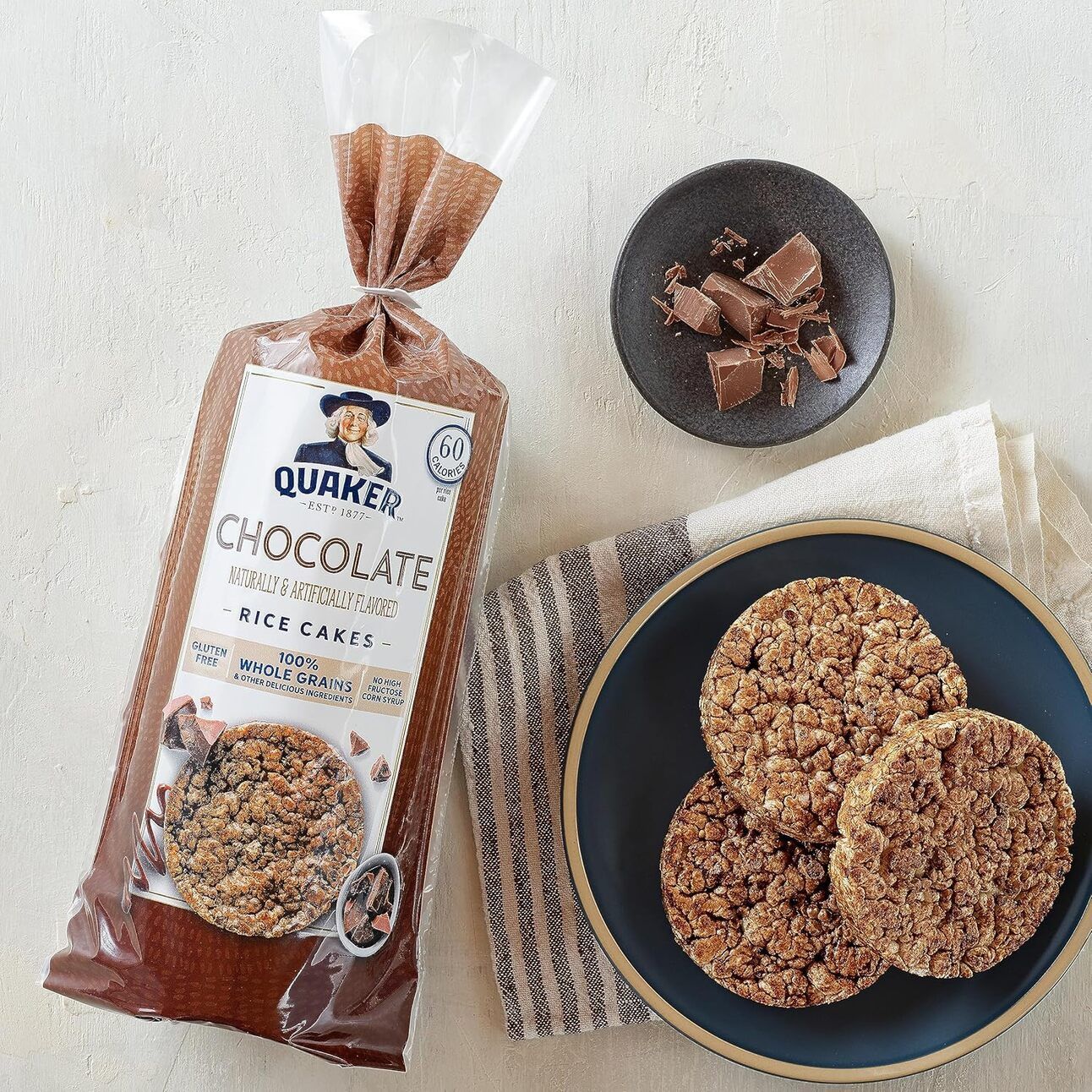
This one isn’t rocket science, but I do think rice cakes actually taste different across brands. I can’t personally get behind Lundberg - the taste is just a bit too stale for my liking. But the Quaker brand? Can’t beat em. I get two packs a week for the grocery store or tack on to my amazon order. Chocolate is my favorite, but the Caramel ones are a close second.
Want to live with intention and find more joy in your daily life? The Root 9 Community is for you. You’ll get inspiration, reflection, and mindful indulgence straight to your inbox three times a week. Unlock your potential for a more balanced, fulfilling life, one week at a time. Join The Root 9 Community here and find your balance.